

Posts Tagged "smart lighting"

8May

DIY vs Professional Smart Lighting Installation for Home: What to Choose in 2026

by admin

Thinking about which one will be the wise choice between DIY vs professional smart lighting installation for your house in 2026? First of all, DIY gives you full control of everything and reduces initial expenditure. On the other side, professional installation comes with ease of use and future relaxation. The decision may have many consequences on various factors. So, knowing both approaches is the first step towards an excellent home experience.

How Smart Lighting is Changing Everyday Living

Life is made easy by using smart lights owing to their capacity to be programmed or scheduled by linking systems together. Additionally, users can also change the level of brightness and colors depending on their preferences and convenience. Hence, smart lighting is both convenient and energy-efficient for the housing environment.

Setting Up Smart Lighting on Your Own

DIY systems provide versatility, whereas professional systems emphasize organized execution and durability. In addition, the comparison of both will enable homeowners to comprehend how each works before making a choice.

● Control and Flexibility vs Complexity

DIY smart lighting enables customers to install smart lighting by themselves without difficulty. However, professional installation is done by skilled professionals with prior planning. This means that DIY installation gives more control, while professional installation provides ease and uniformity.

● Integration and System Performance

It is difficult for DIY systems to connect several devices to form an efficient system. Conversely, professional smart lighting installation guarantees a smooth connection between all the different devices forming one system. Hence, professional systems perform more smoothly than DIY systems.

What Happens When Installation is Handled Professionally

Professional installation is all about precision, whereas do-it-yourself relies upon one’s capacity and time spent. Furthermore, the comparison between the two provides definite differences in setup quality and system efficiency.

● Structured Design vs Independent Setup

Designers provide a complete smart home lighting setup depending on layouts and customer needs. At the same time, DIY users set up their systems gradually without any plan. For this reason, professionally set-up lighting systems become more organized.

● Advanced Automation vs Basic Control

Professional systems have complex functionalities within integrated smart lighting systems. In contrast, do-it-yourself systems only provide basic control functionalities without further user input. Consequently, professionals offer better automation than manually configured systems.

Understanding the Cost of Smart Lighting Installation

Cost differences have an important influence when evaluating DIY and professional installation methods. Furthermore, there is varying value in both options based on budget constraints and future considerations.

● Upfront Cost vs Long-Term Value

DIY systems lower the initial cost because users save money on service charges and installation charges. Furthermore, users spend money on devices and tools needed for installation only. However, the cost of smart lighting installation services involves professional setup and optimization.

● Time Investment vs Convenience

DIY installation necessitates research, setup, and debugging at different configuration phases. However, professional services provide convenience through fast and precise installation. Thus, consumers must make a decision to either save time or money.

● Installation Reliability and Performance

An accurate smart lighting installation will guarantee the system’s efficiency and effectiveness. A proper installation of smart lighting will make the system more effective and usable. In other words, the process of installation has an effect on the performance of the entire system.

Finding the Right Fit for Your Space

The choice of method is contingent upon personal preference, skill level, and convenience. Moreover, comparing the two methods can help one decide which method suits his or her own house.

● Simplicity vs Custom Control

The DIY method provides flexibility and control when altering or upgrading the system. Nevertheless, the professional solution ensures effective home lighting automation with less effort from the user. Therefore, the selection is determined by which aspect one prioritizes between control and ease of use.

● Small Spaces vs Complex Layouts

The DIY installations suit small areas with few devices and simpler installations. Large houses, however, gain better results from the services of experts. Thus, space complexity plays an important role in the decision.

Conclusion

Smart lighting provides options to choose from, either DIY practices or professional help. In addition, a comparison between the two methods will enable the homeowner to realize the difference between the two. Thus, choosing the appropriate option will ensure effective lighting and easy control.
30Mar

How Smart Lighting Integrates With Solar Power Systems At Home

by admin

Smart homes don’t just have voice assistants or devices that can be managed by apps anymore. Homeowners today are making their homes more energy efficient by mixing clean energy with automation. Smart lighting with solar energy integration is one of the most useful combinations because it lowers power bills and increases control and convenience.

What Is Smart Lighting and Solar Integration?

When you use apps, sensors, or your voice, you can handle smart lighting systems from afar. When paired with solar power systems, these lights get their power from solar panels instead of the power grid.

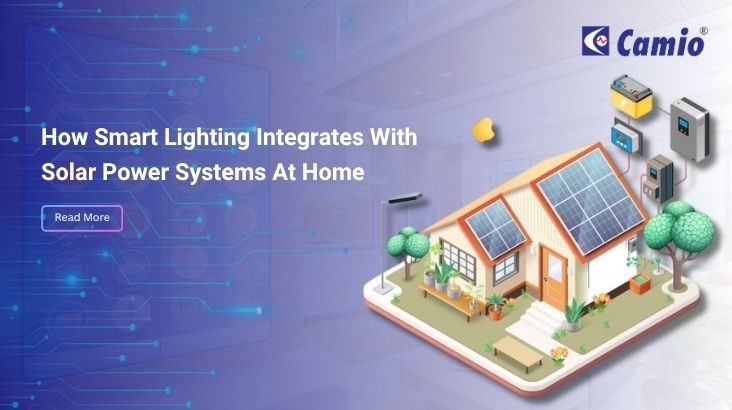
Solar panels, batteries, and lighting settings are all part of this idea of smart home solar integration. Solar panels make power during the day. It either directly powers your lights or stores energy in batteries for use at night.

How the Integration Works

The process of merging is easy and works very well. Solar panels put on roofs collect sunlight and turn it into power. Here’s how the power gets to your home: it goes through an inverter.

Your lighting system links to the solar power source when you use smart lighting with solar power. If you have a battery, it can store extra power for later use.

For smart lighting solutions to work, they use:

  • Motion sensors to turn lights on and off
  • Timers for planned lights
  • Remote control apps for phones
  • AI-based changes to light and usage

Together, these components create effective solar-powered home automation lighting systems that save time and money.

Key Components of the System

To put together an integrated system, you need a few key parts:

  • Solar Panels: These collect sunlight and turn it into power. The size you need relies on how much energy your home does.
  • Battery Storage: Batteries hold energy that isn’t being used. This keeps your lights on even when the power goes out or when it’s dark.
  • Smart Lighting Devices: You can handle these things with your voice or an app. Examples include smart bulbs, LED strips, and automatic switches.
  • Controller or Hub: Solar energy and lighting control talk to each other through a central system.

When put together, these parts make solar lighting systems for modern homes that work well.

Benefits of Smart Solar Lighting

Putting solar power and smart lights together does more than just save energy. It also makes everyday life better by making lighting faster, more consistent, and easier to control.

  • Lower Electricity Bills: Solar-powered smart lighting lessens reliance on energy from the grid. In the long run, this saves a lot of money.
  • Energy Efficiency: Smart systems make sure that lights only turn on when they’re needed. Features like lowering and scheduling make things even more efficient.
  • Eco-Friendly Living: Clean and endless, solar electricity is a good choice. When you combine it with automation, your carbon output goes down.
  • Backup During Power Cuts: If you store power in batteries, your lights will still work even when the power goes out.
  • Convenience and Control: You can change the lights from anywhere with smart lighting automation. You can also make habits that fit the way you live.

Real-Life Use Cases

Smart lighting with solar energy integration is already being used in a variety of ways by many homes.

  • Solar panels power yard lights outside.
  • Motion-sensor lights to keep you safe
  • Automated lights inside based on time or occupancy
  • Street-style solar lights for paths and driveways

These uses demonstrate the adaptability and scalability of solar-powered home automation lighting systems.

Things to Consider Before Installation

Remember these things before you set up your system:

  • Sunlight: The area where you live should get enough sunlight for solar power creation to work well.
  • Initial Investment: Solar systems cost money up front, but they pay for themselves over time.
  • Compatibility: Make sure that the lights you’re using can work with smart home solar integration.
  • Battery Size: Pick a storage option based on how much light you need.

When you plan these things right, you can be sure of better results and return on investment.

Future of Smart Solar Lighting

Smart lighting with solar power appears to have a bright future. As AI and IoT get better, lighting systems are getting smarter and better at what they do.

Soon, houses will have systems that can predict the weather, figure out how many people are in the house, and change the lights based on that information. More reliable and easy to get solar-powered smart lighting will also come from better battery technology.

Conclusion

Smart lighting and solar power together are a useful way to live in a more environmentally friendly way. It saves money on energy, makes things easier, and encourages people to live in an eco-friendly way. With the rise of smart lighting automation, more homes are switching to energy options that are smarter and use less energy.

Putting money into solar lighting systems now will not only help your home, but it will also help make the future better.

18Feb

The ultimate guide to smart lighting for residential and commercial spaces

by admin

When we talk about smart lighting, it isn’t just about some fancy bulbs, turning to blue from purple and then to red. Instead, it’s about engineering excellence, blending in automation, control, efficiency, and intelligent energy management in one package. From houses to offices, retail stores, and even industrial complexes, wireless smart lighting automation has an indispensable role in optimizing costs and shaping an immersive experience.

However, investments in smart lighting for homes and offices require clarity. That being said, let’s make some intelligent decisions based on the guide we have crafted for you.

Smart lighting in residential spaces

When we talk about homes, smart lighting focuses on personalization, comfort, and convenience. Installing the LEDs or bulbs isn’t just a way of uplifting your standards of living. Rather, it’s integrating automation control and efficiency in everyday living.

A well-orchestrated residential smart lighting setup offers innumerable benefits to the homeowners. Here’s how!

  1. Reduced electricity consumption through LED dimming and scheduling, thereby preventing unnecessary full-power operation throughout the day.
  2. Scene-based control that adjusts brightness and color temperature instantly, allowing different moods without manual recalibration.
  3. Remote access via mobile applications to enable smart lighting management even when physically absent from the site.
  4. Voice-enabled interaction with integrated assistants to simplify operations and cut off dependency on manual switches.
  5. Automated security simulation in vacant houses to create the illusion of occupancy and deter trespassers.

Proper zoning with smart lighting systems makes a huge difference. Living rooms, for instance, benefit the most from layered lighting, while kitchens usually need task-focused brightness. Similarly, bedrooms require dim-to-warm transitions for better nighttime comfort.

Smart lighting in commercial spaces

Every traditional lighting component installed at offices, retail stores, warehouses, or healthcare facilities consumes way more energy than residential ones. This is where commercial smart lighting comes into play, cutting down costs dramatically through the ways described below.

  1. Occupancy-based automation that switches the lights off in the unused zones, thereby reducing energy consumption in vacant meeting rooms, corridors, and storage rooms.
  2. Daylight harvesting controls adjust artificial lighting automatically to maintain consistent brightness while minimizing electricity usage.
  3. Centralized monitoring dashboards for multi-floor or multi-location management allow facility managers to control smart lighting systems from a unified portal.
  4. Real-time energy tracking flags inefficiencies and enables data-driven cost optimization decisions.
  5. Predictive maintenance alerts slash downtime by identifying fixture or driver issues before complete system failures.

Types of smart lighting systems

Choosing the right lighting automation system will depend on property size, infrastructure readiness, and future expansion goals. Below are some of the most common options you can explore further.

  1. Wi-Fi-based systems that are easy to install and hence ideal for small homes. However, they are not suitable for large-scale, reliable setups.
  2. Z-Wave mesh networks or Zigbee offer stronger connectivity across bigger residential properties, thereby ensuring stable device communication.
  3. DALI-based wired systems are designed for commercial buildings and offer high scalability and centralized programming.
  4. Hybrid IoT-integrated systems combine local control with cloud analytics, enabling advanced automation and reporting flows.

Design factors that influence performance

Technology alone cannot guarantee success for smart LED lighting setups. Rather, planning also plays an indispensable role in this aspect. Hence, before installation, consider the below areas.

  1. Clear zoning between task, ambient, and accent lighting is necessary so that automation doesn’t compromise functional needs.
  2. Pre-defined automation logic based on real usage patterns instead of adding controls without a clear purpose.
  3. Strong and stable network infrastructure, especially for wireless systems that rely on uninterrupted connectivity for performance deliveries.
  4. Future scalability requirements to ensure the systems can expand without complete replacement.

Cost, ROI, and sustainability

A considerable upfront investment will be required for smart lighting solutions for homes and offices. However, the long-term savings often offset the cost through lower energy consumption, reduced maintenance expenses, and extended LED lifespan.

In commercial environments, returns on investments usually become visible within a few years, depending on usage intensity. On the contrary, in residential spaces, the value originates from convenience, comfort, and controlled energy spending.

Talking from a sustainability perspective, smart lighting minimizes carbon footprint, reduces waste, and supports green building compliance standards.

Conclusion

Smart lighting is no longer a luxury upgrade of living standards. Rather, it has formed a practical, scalable solution for modern residential and commercial spaces. In homes, it enhances daily living through personalization and automation. In commercial properties, it drives measurable efficiency and operational control. When designed strategically, wireless smart lighting automation doesn’t just illuminate spaces — it optimizes them.

Chat with us