

Posts Tagged "lighting automation"

15May

The Psychology of Lighting: How Automation Influences Mood and Behavior

by admin

Lighting plays a role in affecting perceptions and feelings that influence the way people interact with their surroundings. The psychology of smart lighting automation explores the mechanisms through which smart lighting controls light intensity and mood. Consequently, they create environments that increase comfort and focus while relaxing users without constant manipulation.

Circadian Lighting and Its Influence on Mood and Daily Rhythm

Smart lights work according to the internal clock of humans and ensure proper sleep-wake cycles. This helps in stabilizing emotions since there is an even flow of energy and rest during the entire day. Thus, smart lighting systems ensure that there is a balanced relationship between the environment and human emotion.

●       Warm Light and Mood Relaxation in Evening Hours

Warm tones in lights decrease mental stimulation and cause people to relax during evenings. In other words, stress is lowered, and the body gets ready for sleep. There is a correlation between lighting and moods when it comes to soothing lights.

●       Cool Light and Mood Activation During Active Hours

The use of cool white light boosts concentration levels by increasing the levels of alertness and hence productivity. Also, the light boosts mental performance by ensuring that the brain remains active. Therefore, human-centric lighting lifts moods by aligning with body rhythms.

●       Adaptive Lighting and Emotional Balance Across the Day

In adaptive lighting, there are modifications of the light’s brightness and color depending on the availability of natural sunlight. Adaptive lighting aids in emotional stability by eliminating mood swings. Adaptive lighting also improves lighting psychology by contributing to behavioral changes in different environments.

Smart Scene-Based Lighting and Its Impact on Mood Control

With scene-based lighting, pre-configured lighting environments can be created, which have a direct bearing on emotions. Moreover, various lighting scenes enable the creation of particular moods like relaxation or concentration. Hence, the lighting impact on smart homes is critical from an emotional perspective.

●       Relaxation Scenes and Emotional Calmness

In soft lighting scenes, the lighting level is lowered to provide a relaxed environment indoors. Hence, stress levels decrease while emotional stability improves following daily activities. Thus, smart home lighting enables relaxation through creating comfortable environments.

●       Focus Scenes and Mood-Driven Productivity

Task-oriented bright lighting enhances concentration and lowers mental exhaustion while working. Moreover, it facilitates sustained attention without causing any discomfort. Therefore, the field of lighting psychology is very important to increase productivity and efficiency.

●       Smooth Transitions and Stable Emotional Response

The change in lighting is always gradual to prevent any form of discomfort. It helps maintain consistency in emotional balance during varied tasks. Further, there is no disparity between lighting and mood owing to smooth environmental transitions.

Sensor-Driven Lighting and Its Effect on Human Behavior

The sensor-activated lighting system responds instantly to any change in the surroundings, and it also offers automatic lighting during the day. In addition to this, such lighting systems change the behavior of people by minimizing their effort.

●       Automatic Response to Presence

The movement sensors activate the lighting once movement is detected, thus no longer requiring the manual switching on of the lights. Therefore, people will be able to maneuver around the space more efficiently. In addition, it ensures that behavioral patterns are followed.

●       Adapting to Natural Light Conditions

The sensors work to control artificial light based on natural daylight and keep the light intensity levels constant. This means it allows for mood lighting systems since the eye is comfortable under varying conditions. As such, energy consumption is optimised as well.

●       Enhancing Comfort Through Seamless Automation

Systems driven by sensors provide a smooth transition, as the light automatically changes without any direct human involvement. Also, such a response makes the environment comfortable for the users while minimizing disruptions to their activities.

●       Encouraging Energy-Conscious Behavior

Automation switches off lights when no one is using them, thereby saving energy. In addition to this, this efficiency also fosters good habits. Additionally, it embodies the fundamentals of the psychology of smart lighting automation, whereby convenience and sustainability influence behavior.

Conclusion

The smart lighting automation technology influences daily life environments by accurately adapting to daily rhythms, occupancy, and sunlight conditions. In addition, it helps maintain emotional stability and behavioral regularity based on scenes and sensors. Consequently, it fosters intelligent living environments that increase comfort and efficiency.
20Apr

Smart Lighting Automation for Multi-Functional Living Spaces

by admin

Houses built today are more flexible in use compared to previous designs. In one room alone, it is possible for the individual to work in the morning, meet people in the afternoon, and have some time off in the evening. It is only necessary, therefore, to have lighting in the house that will adapt according to the requirements of the occupier. Smart lighting automation technology here offers the best solutions for you.

Why Multi-Functional Living Spaces Require Intelligent Lighting

As houses get smarter to meet current needs, lighting has gone beyond just providing light. Rooms meant to offer multi-functionality cannot do so without intelligent lighting. Lighting that does not provide for adaptability in order to meet different circumstances is usually not effective in multi-functional rooms. It may also hinder the intended functionality of such rooms.

Multi-functional lighting allows homeowners to change the mood and purpose of any given room as required. While bright lighting will suit daytime use for working purposes, soft lighting will be appropriate for relaxation purposes.

What is Smart Lighting Automation?

Lighting systems have come a long way from being merely devices whose operations depended on manually controlled light switches. With advanced lighting technologies, homeowners can change lighting according to their preferences.

Automated lighting systems can sense and automatically adjust the brightness as well as the color. Also, you can remotely control them using smartphones or mere voice commands.

Key Advantages of Smart Home Lighting in Versatile Spaces

Intelligent home lighting solutions offer not just improved convenience for users. Moreover, they become particularly valuable in rooms where multiple activities take place. Lighting management systems contribute directly to efficiency, convenience, and comfort.

Personalized Lightings

Among the many benefits that intelligent lighting provides, one of the major ones is personalization. While working, light bulbs can be dim or bright depending on what a user requires. On the contrary, the same space can become cozy during the evening hours thanks to the automated process.

Efficiency

Automated lights help minimize unnecessary use and thus save electricity since the lights switch on only when required. The automation is supported by such features as motion sensors, lighting scene setup, and responsiveness to natural daylight.

Convenience

Smart lighting solutions allow controlling all aspects of ambient lighting in a very easy way. Through mobile applications, sensors, and voice commands, users can switch their modes with just a tap.

Top Recommendations for Home Multi-Use Rooms

A good lighting system for home offices and other multifunctional areas should consist of different kinds of lighting. Each of them plays its role, thus contributing to the efficiency of smart lights installation.

Ambient Lighting

Ambient lighting is responsible for providing sufficient light to ensure visibility within an area. The purpose of ambient lighting is to provide a comfortable amount of light required for performing basic tasks.

Accent Lighting

Accent lighting is mainly concerned with emphasizing the décor, texture, or other features that make a particular feature unique. It contributes greatly to creating an environment.

Scene Automation

The best smart home lighting system combines these types of lights into one convenient scene. The room changes according to your needs, switching from working mode to relaxing or entertainment mode.

Automated Lighting Systems in Contemporary Homes

Contemporary homes have lighting fixtures that conform to their occupants’ needs. Unlike other types of lighting fixtures, contemporary homes’ automated lighting systems do not need to be adjusted regularly.

Examples of automated lighting systems for modern living spaces include lights that switch on as a result of a programmed schedule. It involves dimming lights at certain times of the day or night and activation of pathway lighting through motion detection.

The Need for Professional Installation for Smart Lighting Automation Systems

To obtain the maximum benefits of smart lighting, you need careful planning and professional installation. Poor automation may cause uneven lighting and functional limitations.

Home lighting automation systems will function most effectively when installed, taking into account all the necessary factors related to room design and usage, and other requirements. Professional installation allows creating a properly functioning system of lights and provides additional comfort through better room aesthetics.

Conclusion

Since contemporary housing is becoming ever more adaptable, its lighting systems should also adapt to these changes. Through the use of a smart lighting solution for home, you can make your rooms more comfortable.

18Feb

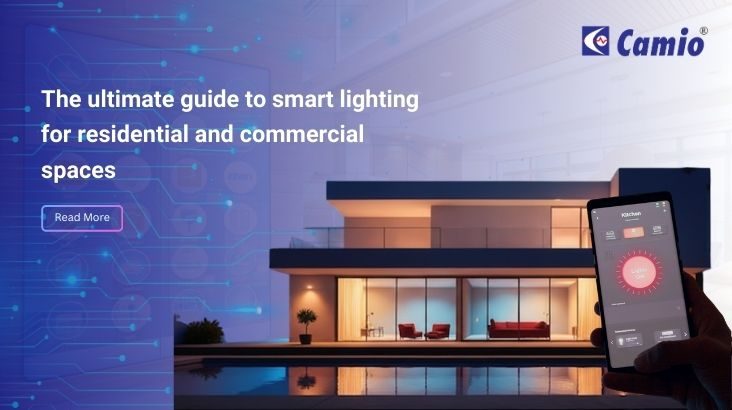
The ultimate guide to smart lighting for residential and commercial spaces

by admin

When we talk about smart lighting, it isn’t just about some fancy bulbs, turning to blue from purple and then to red. Instead, it’s about engineering excellence, blending in automation, control, efficiency, and intelligent energy management in one package. From houses to offices, retail stores, and even industrial complexes, wireless smart lighting automation has an indispensable role in optimizing costs and shaping an immersive experience.

However, investments in smart lighting for homes and offices require clarity. That being said, let’s make some intelligent decisions based on the guide we have crafted for you.

Smart lighting in residential spaces

When we talk about homes, smart lighting focuses on personalization, comfort, and convenience. Installing the LEDs or bulbs isn’t just a way of uplifting your standards of living. Rather, it’s integrating automation control and efficiency in everyday living.

A well-orchestrated residential smart lighting setup offers innumerable benefits to the homeowners. Here’s how!

  1. Reduced electricity consumption through LED dimming and scheduling, thereby preventing unnecessary full-power operation throughout the day.
  2. Scene-based control that adjusts brightness and color temperature instantly, allowing different moods without manual recalibration.
  3. Remote access via mobile applications to enable smart lighting management even when physically absent from the site.
  4. Voice-enabled interaction with integrated assistants to simplify operations and cut off dependency on manual switches.
  5. Automated security simulation in vacant houses to create the illusion of occupancy and deter trespassers.

Proper zoning with smart lighting systems makes a huge difference. Living rooms, for instance, benefit the most from layered lighting, while kitchens usually need task-focused brightness. Similarly, bedrooms require dim-to-warm transitions for better nighttime comfort.

Smart lighting in commercial spaces

Every traditional lighting component installed at offices, retail stores, warehouses, or healthcare facilities consumes way more energy than residential ones. This is where commercial smart lighting comes into play, cutting down costs dramatically through the ways described below.

  1. Occupancy-based automation that switches the lights off in the unused zones, thereby reducing energy consumption in vacant meeting rooms, corridors, and storage rooms.
  2. Daylight harvesting controls adjust artificial lighting automatically to maintain consistent brightness while minimizing electricity usage.
  3. Centralized monitoring dashboards for multi-floor or multi-location management allow facility managers to control smart lighting systems from a unified portal.
  4. Real-time energy tracking flags inefficiencies and enables data-driven cost optimization decisions.
  5. Predictive maintenance alerts slash downtime by identifying fixture or driver issues before complete system failures.

Types of smart lighting systems

Choosing the right lighting automation system will depend on property size, infrastructure readiness, and future expansion goals. Below are some of the most common options you can explore further.

  1. Wi-Fi-based systems that are easy to install and hence ideal for small homes. However, they are not suitable for large-scale, reliable setups.
  2. Z-Wave mesh networks or Zigbee offer stronger connectivity across bigger residential properties, thereby ensuring stable device communication.
  3. DALI-based wired systems are designed for commercial buildings and offer high scalability and centralized programming.
  4. Hybrid IoT-integrated systems combine local control with cloud analytics, enabling advanced automation and reporting flows.

Design factors that influence performance

Technology alone cannot guarantee success for smart LED lighting setups. Rather, planning also plays an indispensable role in this aspect. Hence, before installation, consider the below areas.

  1. Clear zoning between task, ambient, and accent lighting is necessary so that automation doesn’t compromise functional needs.
  2. Pre-defined automation logic based on real usage patterns instead of adding controls without a clear purpose.
  3. Strong and stable network infrastructure, especially for wireless systems that rely on uninterrupted connectivity for performance deliveries.
  4. Future scalability requirements to ensure the systems can expand without complete replacement.

Cost, ROI, and sustainability

A considerable upfront investment will be required for smart lighting solutions for homes and offices. However, the long-term savings often offset the cost through lower energy consumption, reduced maintenance expenses, and extended LED lifespan.

In commercial environments, returns on investments usually become visible within a few years, depending on usage intensity. On the contrary, in residential spaces, the value originates from convenience, comfort, and controlled energy spending.

Talking from a sustainability perspective, smart lighting minimizes carbon footprint, reduces waste, and supports green building compliance standards.

Conclusion

Smart lighting is no longer a luxury upgrade of living standards. Rather, it has formed a practical, scalable solution for modern residential and commercial spaces. In homes, it enhances daily living through personalization and automation. In commercial properties, it drives measurable efficiency and operational control. When designed strategically, wireless smart lighting automation doesn’t just illuminate spaces — it optimizes them.

Chat with us