
Category "Home Automation"

6Nov

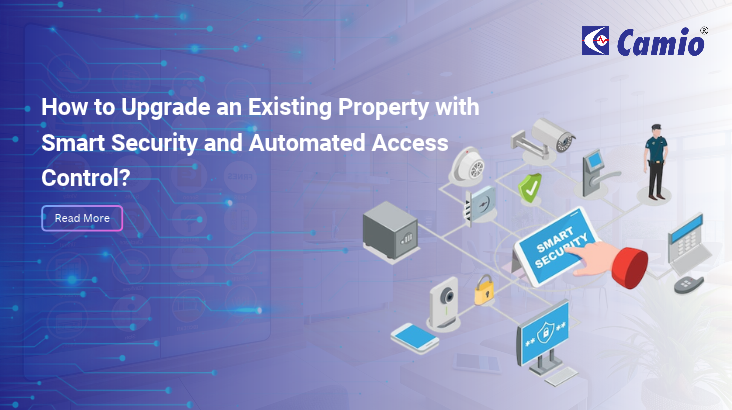
How to Upgrade an Existing Property with Smart Security and Automated Access Control?

by admin

Imagine leaving home for work and quickly wondering, “Did I lock the door?” “Did I close the window?

Now, imagine checking all these by opening an application on your phone. Sounds great, right?

You don’t need to build a new house to enjoy this. You can make it possible just by integrating smart automation technology into your existing property. Let’s explore how you can transform your ordinary property into a smart one.

How Can I Upgrade My Existing Home with Smart Security?

You can upgrade your existing property by including smart doors, lighting automation, smart locks etc. You don’t need to introduce everything at once; you can do it slowly, one after the other. Here are six ways to get started.

Start by Checking Your Existing Security Setup

Take a walk around your property. Check your doors, windows, balconies and other points. Understand whether there are any spaces that are not captured by your existing cameras. Check whether you have options to monitor the people who are coming to your home when you are away.

Analyze the existing power supply, Wi-Fi coverage, and wiring to choose the right automation product for your property.

Studying your spaces and asking these questions is a better option you can adopt when you begin to redefine the existing security setup in your home.

Replace Traditional Locks with Smart Door Locks

Do you still need to carry a bunch of keys when you go out? Do you get tense when you lose any of your keys? Smart door locks are a great way to avoid the need for traditional keys.

Smart technology offers different ways to open the door without the need for keys. Here are some of them.

  • Using PIN codes or digital passwords
  • Fingerprint recognition
  • Using RFID Cards and Access Tags
  • Smartphone applications

You can pick any of these security automation solutions by assessing the thickness of your doors and lock dimensions.

See Who Is at Your Door with Smart Cameras

What if someone comes to your home when you are away?

A smart camera is equipment that allows you to monitor when a person enters your home and even lets you communicate with them and provide instructions. From motion detection that alerts you when movement occurs within the camera’s areas to night vision that captures footage even in poor lighting conditions, there are cameras with many features. Person detection, two-way audio, and cloud or local storage are some of the features that these kinds of cameras offer.

Analyze the connectivity you have in your property and choose the appropriate smart camera and smart security for existing homes.

Take Control of Entry with Automated Access Control

How many people need access to your property? What if you want to give access to your home to someone other than a family member in a secure way?

Introducing automated access control in your home is the best way you can pick to tackle the mentioned situations. Whether you want to give a specific person access to your home using proximity cards or want to open your gates for someone with just a command, you can do so through automated access control and security automation solutions. The following are solutions that you can pick based on your requirements:

  • RFID Readers: allow entry with proximity cards or keys
  • Biometric Scanners: provide accessibility through fingerprint recognition
  • Video Intercoms: Help you recognize the person before granting entry
  • PIN keypads: Ensure access through codes
  • Smart gate controllers: Operate the gate through commands

Modern automation systems can connect smart doors, automated gates, and electrical systems and monitor them with a unified platform. Hence, analyze your doors, gates, and wiring system before choosing automated access control for your property.

Add Sensors That Alert You to Unexpected Activity

How about getting alerts when something unusual happens? Much useful, right? Getting an alert at the right time will let you take appropriate actions and prevent it from getting worse.

Door and window contact sensors, PIR motion sensors, glass-break sensors, and smart alarms are some of the sensors that help you know when someone tries to open the door, damage the window, or enter your home premises. You can study these devices, understand your property, and integrate the ideal smart security for existing homes.

Connect Everything Through a Smart Home Hub

Wouldn’t it be easier to manage your smart doors, smart cameras, and other devices through mobile applications?

You can make it possible by using the following modes in a compatible smart home hub.

  • Away Mode: Activates selected cameras when you are away
  • Intrusion Alert: Gives alerts when a person tries to enter your house through restricted areas
  • Night Mode: Locks selected doors and ensures protection
  • Visitor Alert: Provides notification when someone rings the doorbell while you are away

Analyze device compatibility, integration standards, and select the ideal product for your property to turn your home smart.

Make Your Existing Property Smarter and Safer

Upgrading your existing property with smart security and automation access control solutions will never become expensive and daunting if you have an idea about the attributes of your existing property, smart automation solutions and their compatibility with your property.  As you understood from the blog, there are many automated access control solutions that keep your valuables safe during the day and night, whether you’re inside the property or away.

Camio Automations, a leading smart automation service provider that you can consider when you want to explore smart home security systems Kochi. Whether you want assistance choosing the best automation solutions for your property or want to enhance the value of your property with top-notch smart security for existing homes and automated access control solutions, Camio Automations is ready to address your requirements. Contact Camio Automations Today to Explore the Ideal Smart Security Systems and Automation Solutions for Your Property
26Oct

How to Plan Smart Home Automation During Villa Construction to Avoid Costly Rework?

by admin

When you are building your villa, it’s the right time to get every detail in place. If that’s the case, then why leave smart home automation until the walls are up and the interiors are done? Just imagine the trouble you will have to go through for redoing the entire electrical wiring just because you forgot to plan motorized curtains, automated climate control, or voice-enabled lighting conduits. That’s money spent unnecessarily in fixing something that could have been done prior. The trick here is to focus on smart home automation during villa construction only, not after you have the structure upright. That being said, let’s explore how you can proceed with the work and prevent yourself from succumbing to the clutches of a costly rework.

Decide Which Smart Home Features Your Villa Needs

The first step is to decide what types of smart home automation features you want to add to your villa. For this, begin with the day-to-day routines that you plan to automate, not just prepare a catalog of advanced devices. Decide whether you want to invest in:

  1. Scheduled lighting system
  2. Occupancy-based AC control
  3. Motorized window curtains
  4. Video-integrated doorbell system
  5. Perimeter camera for surveillance
  6. Automated gating technology

If you are worried about how to plan smart home automation for a new villa, make sure to identify where to put each of these features and mark the zones where you do not need automation yet. Once you have the features finalized, determining the electrical requirements, device quantities, and budget will become much easier for you.

Coordinate Automation Plans With Your Architect and Electrical Layout

Before you start electrical work for the villa, talk with your architect about the drawings and the villa automation plan. This will allow you to:

  1. Mark smart switches against furniture positions
  2. Decide where sensors can be positioned against ceiling layouts
  3. Plan control panels against accessible service areas

Check if the curtain tracks have enough motor space and that the wardrobes or long cabinets won’t obstruct your access to sensors and smart switches.

Plan Wiring, Conduits, Power Points, and Network Connectivity

Before your contractor closes the walls and ceilings, make sure to specify the infrastructure each smart device will need. For smart switches, check if there’s adequate black box depth and availability of neutral wires. As for access points and suitable camera connections, check if you have space to install Ethernet cables. Before plastering, take some photos of the concealed routes and label all the necessary cables, which will be further used to power your home automation systems.

Integrate Smart Lighting, HVAC, Curtains, and Security Systems

You will have to decide how each of these smart villa automation systems will interact with one another for the convenience you desire. For example, you can configure the smart lights in a way that they will automatically get dimmer once evening settles in. Similarly, the HVAC system can be programmed where the outside temperature automatically adjusts the thermostat settings. However, to ensure you get these benefits, check the following before purchasing the hardware:

  1. Dimmer-driver compatibility
  2. AC control interfaces
  3. Curtain motor requirements
  4. Security-system integrations

Select a Compatible Smart Home Automation System

Always choose a feasible home automation Kerala platform or control architecture based on your required smart features. For this, check if the selected lighting controls, curtain motors, sensors, or AC equipment can be connected with the system. If integrations are needed, validate if you need to pay for additional licenses or gateways.

Conclusion

The moment you decide on home automation planning, even a delay by one or two days can push the entire construction routine back. So, rather than waiting till the structure is completely constructed, begin the work from the beginning. From deciding the key components of the smart housing system to gathering all the necessary devices and accessories, the earlier you complete, the better the outcomes will be.

7Oct

A Complete Guide to Home Automation Protocols Wi-Fi, Zigbee, Z-Wave, and KNX

by admin

Imagine a house that runs its lights, locks, and temperature control without any effort on your part while you take care of your daily routines. This ease can only come through the underlying technologies working properly. In this guide, all home automation protocols explained in an easy-to-understand way, including their communication process and areas of use.

Why Are Automation Protocols Essential in a Smart Home?

The choice of home automation protocols determines the ability of the sensor, switch, or lock to communicate with other components of the system. The absence of a shared language leads to isolation and not integration in one single network, and it definitely costs a lot for the industry.

The global market of smart homes is expected to rise to $250.6 billion by 2029. This steady upward trend demonstrates how important interoperability is for average customers, and not just for installers and integrators anymore.

What Are Some Important Home Automation Protocols?

Several standards have been developed and compete for space within today’s smart home, each catering to various appliances and budget constraints. An understanding of their advantages is essential when making choices.

●     Wi-Fi for Direct Smart Home Connectivity

Wi-Fi enables devices to connect directly to a home router without requiring any additional hub. This is the reason why Wi-Fi home automation is ideal for cameras, televisions, and other equipment that requires high bandwidth. Nevertheless, an excess number of devices connected to Wi-Fi leads to congestion.

●     Zigbee for Low-Power Mesh Networks

Zigbee is a network that operates on self-healing mesh technology; here, the devices operating through mains power act as repeaters to provide wide coverage. Hence, Zigbee is ideal for sensors, switches, and light bulbs that require batteries that last for months. It operates on the 2.4 GHz frequency, like Wi-Fi.

●     Z-Wave for Reliable Wireless Communication

Z-Wave uses the sub-GHz frequency range, thereby cutting down on possible interference from nearby Wi-Fi or Bluetooth gadgets. Its stringent certification procedure makes interworking of products made by various manufacturers easier. Nevertheless, a Z-Wave network can accommodate fewer gadgets than Zigbee.

●     KNX for Wired Building Automation

The KNX home automation employs a wired network, hence offering predictable operation that is hard to match by any wireless system. This predictability makes it the first choice for use in villas, hotels, and offices with complex requirements. However, installation requires advance planning because the cables have to be laid before the walls are done.

●     Bluetooth for Short-Range Smart Device Control

Bluetooth and Bluetooth Low Energy are suitable for short-distance jobs like unlocking the door or pairing the phone. As far as smart home protocols go, Bluetooth is distinct for being very simple to use because most times, you don’t need an additional hub. However, its small range is a disadvantage in whole-home automation.

●     Insteon for Wired and Wireless Automation

Insteon integrates wired powerline messages and wireless messages in one system, providing better performance indoors. The use of two pathways for home automation increases the likelihood of receiving a message through one pathway should the other fail. However, due to its diminishing ecosystem, it is becoming less popular.

●     Thread for Low-Power Mesh Networks

Thread offers a new IPv6 Mesh Network for battery-operated locks and sensors with longer battery lifetimes. This particular network was created to serve Matter right from its inception, and hence the reason why it requires a border router and not a hub.

●     Matter for Cross-Platform Smart Home Compatibility

Matter serves as a universal language through which devices from various vendors can operate together alongside Amazon Alexa, Google Home, and Apple Home. According to the Connectivity Standards Alliance, there are thousands of certified Matter products globally. Consequently, consumers are less concerned about the issue of ecosystem lock-in.

Conclusion

In the end, no protocol works best for all cases because wired and wireless technologies have their own advantages and disadvantages. The homeowner can derive the most benefit by ensuring the devices fit well with the appropriate protocol and creating a network using those protocols.

25Sep

How RTI Control Systems Simplify Home Automation for Homeowners in Kochi

by admin

Kochi’s newest villas are being built around comfort that actually works, not just polished interiors. Homeowners now demand one single system managing lights, security, and entertainment, not a phone full of separate apps.

That’s exactly where Remote Technologies Incorporated, or RTI control systems for home automation, comes in. RTI has become a favourite among installers handling ambitious, tech-forward homes. Here’s what makes it genuinely worth considering.

Why Kochi Homeowners Are Choosing RTI Control Systems?

Demand for genuinely reliable home automation has grown fast across Kochi’s newer residential projects. Homeowners aren’t just buying gadgets anymore; they’re buying back time by reducing daily friction.

India’s smart home market is projected to reach USD 6.71 billion in 2026. It is expanding at nearly 29.12% a year, according to Mordor Intelligence’s India smart home market report. Numbers like that explain why more Kochi families are moving past basic switches toward a smart RTI control system.

What Makes RTI Home Automation Simple and Different?

Plenty of automation brands promise convenience, but RTI home automation backs that promise up with real engineering. Homeowners get one dependable integrated system instead of five disconnected apps fighting for attention.

·       One Interface, Every System

A single touchscreen or handheld remote in an RTI setup manages lighting, AC, curtains, and audio together. There’s no need to jump between separate apps just to dim a room and lower the blinds before a film starts. This kind of tight integration is exactly what RTI control systems for home automation were built to deliver, right down to two-way feedback on every connected device.

·       Built to Grow with the Home

RTI systems are also known for staying updated so that you can skip the fear of using a system that will become irrelevant in the upcoming years. They work smoothly with voice assistants like Alexa or Google Assistant, and updates keep pace with newer devices automatically. That kind of longevity matters in a large villa, where ripping out and replacing hardware later gets expensive fast.

Everyday Benefits of RTI Home Automation Systems in Kochi

Choosing RTI home automation systems in Kochi isn’t really about showing off fancy technology to guests. The real payoff shows up quietly, in routines that get a little easier every single day.

·       Convenience Without the Learning Curve

Homeowners don’t need any technical background to run an RTI setup with confidence. Mornings, movie sessions, and even sleeping time all become easier with one simple tap. Such convenience is the reason that families who have done home automation Kochi recommend the system to others.

·       Energy Efficiency and Long-Term Savings

Automated lights, air conditioning, and curtains save electricity by switching off when no one uses them. After several months, homeowners will notice savings on their bills without any extra effort. Energy-efficient management of devices is one of the most compelling features of the smart home automation, especially considering the hot climate in Kochi.

·       Security That Runs in the Background

RTI systems combine everything related to security in one interface – gate access control, cameras, door sensors. Homeowners receive instant notifications and are able to monitor the status of devices remotely. This layered protection offers real peace of mind whenever a family steps away, whether for an evening out or a longer trip.

Conclusion

A dependable home control system turns a well-built apartment into a space that genuinely adapts to daily life. RTI turns a home’s scattered technology into one calm, dependable system that just works every single day. For Kochi homeowners weighing their options, it remains a proven, future-ready choice worth serious consideration before finalising any automation plan for their home.

7Sep

Smart Security Automation for Homes in Kochi: Enhancing Safety with Intelligent Technology

by admin

Have you ever thought of protecting your Kochi home when you are out? The enhanced and intelligent smart security automation for homes in Kochi uses cameras, sensors, alarms, smart locks and other connected devices for making the security system reactive.

Now, homeowners are able to monitor, detect, and react to any abnormal behavior using a linked system instead of just using conventional locks or individual camera systems.

What Are the Benefits of Smart Home Security Automation?

Smart security automation systems make the process of house security easy because of its being connected, responsive, and convenient. With an intelligent security system, movement detection is possible to trigger the system on certain conditions.

1. Real-Time Monitoring

An intelligent camera lets owners remotely monitor their home on their phones. Whenever they are traveling outside Kochi, they will be able to monitor their entry point or parking place by receiving a motion alarm. They can also speak through two-way audio with a person standing at their door.

2. Instant Intrusion Alerts

Unforeseen openings of doors and windows may be detected by sensors and alarmed or notified about. In case there is an opening of a rear window while you sleep, this smart home security system will detect and alarm you almost immediately.

3. Smarter Access Control

Smart locks can offer keyless entry via PINs, mobile applications, biometrics or temporary access codes, depending on the lock type. You don’t need to leave a spare key with a housekeeper; you can give a temporary key and take it away again later.

4. Automated Security Responses

Home security automation devices can collaborate, rather than compete, with one another. If a suspecting movement is detected, the sensor will be able to activate lights, alarms, or even cameras. Lights can switch on automatically outdoors while the camera will activate to record any movements detected around your fence or gate at night.

5. More Convenience for Families

Smart security automation Kochi can minimize the need for constant manual monitoring. You can control multiple security devices from a central app or security automation system. Once everyone is out of the building for work or school, one “Away” routine can lock compatible doors, turn on cameras, and arm certain sensors.

What Are Popular Smart Security Home Automation Systems?

Today’s home automation Kochi may include multiple units to provide multiple layers of security. It depends on the home’s layout and entry points, connectivity, and security needs.

· Smart CCTV and Video Doorbells

The intelligent CCTV surveillance cameras provide live videos, motion detection, video recordings, and notifications. Install a video doorbell for better monitoring at the front door. As per a study by KEN RESEARCH, more than 84,000 CCTV surveillance cameras have been installed in 100 Smart Cities, proving their significance for safety purposes.

· Smart Locks and Access Systems

Use of smart locks will minimize the use of physical keys. Sometimes, individuals can gain access to doors through PINs, mobile devices, biometrics, or even another authentication process. An authorized PIN can be used for a family member to enter the property when they come home without having to wait for someone to open the gate.

· Motion and Door Sensors

Motion sensors are a top trend in smart home automation Kochi that can sense movement and contact sensors can sense door or window openings. One sensor attached to a balcony door can trigger an alarm when the door opens unexpectedly in “Away” mode.

· Smart Lighting & Security Alarms

Lighting can enhance security by improving visibility throughout the house, pathways, and outdoor areas. Smart alarms can alert to certain “Security Events” if the system is set to do so. A motion detector may be installed on a porch light to turn it on after dark if someone walks near the entrance.

Conclusion

Smart security automation can turn a typical home into a responsive security system. Smart cameras, smart sensors, smart locks, lights and alarms can offer multi-layered protection and visibility for homeowners in Kochi. This way, homeowners can create a safer, more reliable smart home by choosing reliable devices and ensuring cybersecurity measures are in place.

18Aug

ABB KNX Home Automation in Kerala: The Ultimate Guide for Luxury Homes

by admin

Kerala’s luxury home scene has changed a lot in just a few years, and homeowners aren’t settling for good architecture alone anymore. ABB KNX home automation in Kerala has quietly become the go-to choice for villa owners planning a new build or a major renovation. This guide walks through what KNX actually does, why it suits luxury homes so well, and what to look out for before choosing a system.

What Makes ABB KNX Different from Regular Smart Home Setups

Grand View Research valued the global smart home automation market at USD 132.4 billion in 2025, projecting growth to USD 168.6 billion in 2026 and USD 940.5 billion by 2033. It is a clear sign that this isn’t a passing trend.

Most budget smart home gadgets end up working in their own little bubble. A smart bulb talks to its own app, a smart lock has a different one, and honestly, none of them really reduce your work.

ABB home automation takes a completely different approach. It runs on one unified bus system that ties together lighting, curtains, climate control, and security under a single protocol. Everything works as one connected system instead of a pile of separate gadgets pretending to be smart.

How KNX Home Automation Actually Works

KNX home automation runs on a wired or wireless bus protocol that’s been an international standard for decades now. It isn’t some proprietary system tied to one brand’s app that stops updating in a few years.

That distinction matters more than people realize at first. Devices from different manufacturers can still communicate with each other as long as they’re KNX-certified, which protects homeowners from getting locked into outdated tech down the line.

Why Kerala Homes Need Climate-Smart Automation

Kerala’s humidity and monsoon season put real strain on regular wiring and electronics over time, more than most people expect. Smart home automation Kerala setups genuinely need to account for this, rather than just copying what works fine in drier states. A well-configured KNX system can respond to humidity, sunlight, and rainfall on its own, adjusting curtains, ventilation, and lighting without anyone lifting a finger. That kind of built-in resilience matters a lot more here than in most other regions.

Why Luxury Homeowners Are Choosing KNX Over Basic Systems

Luxury home automation isn’t really about flashy gadgets anymore, at least not for people who’ve actually lived with one for a while. It’s about a home that responds intelligently without needing constant manual input from whoever lives there.

A few reasons this keeps coming up in conversations with homeowners:

  • One system controls lighting, curtains, security, and home theatre together, not through five different apps
  • KNX components are known for lasting decades without major faults, which is rare in this space
  • Resale value tends to hold up better in homes with professionally installed automation
  • Voice and app control work smoothly once the backend wiring is done right the first time

Only transparent providers in this market back their ABB KNX smart home system with a sufficient product warranty and zero annual maintenance charges. This is genuinely uncommon in this industry and worth asking any provider about directly before you commit.

Choosing the Right Home Automation Systems for Your Property

Not every property needs the exact same setup, and that’s usually where homeowners get overwhelmed early in the process. Home automation systems should be planned around how a family actually lives day to day, not just what looks impressive in a brochure.

· Start With a Site Assessment

A proper installer visits the property first, checking wiring layout, room structure, and network capability before recommending anything at all. Skipping this step almost always leads to expensive rework later.

· Prioritize Core Zones First

Living areas, bedrooms, and entry points usually get automated first for good reason. Lighting, curtain control, and security integration- these zones make the most noticeable difference in daily life.

· Plan for Scalability

A good system should let homeowners add features later. So, you can add home theatre integration or gate automation without tearing out existing wiring or starting the whole project over again.

· Confirm Warranty and Maintenance Terms

With KNX hardware being an investment for many years, it is good to confirm the warranty period. Also find out whether there will be any annual costs for maintenance before making a contract.

Conclusion

It is as important to select the right automation partner if you want to choose the right technology. With proper planning, appropriate KNX hardware from ABB, and the right supplier who knows all about Kerala weather and its people, a luxurious house will require almost no maintenance for many years.

10Aug

Common Questions Kerala Homeowners Ask Before Installing Smart Automation

by admin

Smart automation is becoming more relevant for both new builds and existing homes across Kerala. But the concept of changed lighting, security, climate control, and appliances that are managed naturally raises real questions. Before committing to smart home automation installation in Kerala, most homeowners want practical answers, not marketing promises. Here are some of the smart home FAQs Kerala homeowners ask most often, along with what actually matters when evaluating smart home automation for your property.

1. Can Smart Automation Be Added to an Existing Home?

Yes, retrofitting is possible in many cases. Wireless solutions often don’t need a lot of rewiring, although certain configurations are better off with connected components for dependability.

Before smart home installation, it’s a good idea for the installer to evaluate your house’s current electrical wiring so they can suggest the best home automation systems for your wiring instead of trying to completely overhaul it.

2. What Can I Actually Automate in My Home?

Homeowners can automate lighting, curtains, air conditioning, security cameras, smart locks, gates, entertainment systems. In fact, they can choose smart appliances and opt for energy monitoring. You don’t need to convert your entire home at once.

Many smart home solutions start with small places, covering one or two rooms. This gets expanded later as part of a broader smart home automation plan.

3. Will My Smart Home Work During Internet or Power Outages?

This is a genuinely important question in Kerala, where outages happen. It depends on whether your system relies on cloud control or works locally. Locally controlled setups often keep the core functions like lighting and locks working without internet, though not every system behaves this way. Power backup is a separate consideration entirely.

Ask your installer directly what functions of your home automation Kerala setup remain available if the internet or power goes down, since not all home automation systems handle outages identically.

4. How Much Does Smart Home Automation Cost in Kerala?

There’s no single fixed price, since the final cost depends on the number of rooms and devices. No matter whether you choose wired or wireless components, the type of sensors and controls, security integration, customisation, and installation complexity, everything depends on deciding the final price of the place.

Rather than comparing just the existing systems on upfront price alone, request a requirement-based quotation for your smart home automation installation in Kerala so the estimate reflects your actual home and priorities, giving you a clearer smart home solutions comparison.

5. Are Smart Home Systems Secure and Private?

Security relies on appropriate device authentication, safe network design and frequent software or firmware upgrades. Access permissions should be carefully reviewed, and it’s worth choosing reputable devices and installers over unfamiliar budget brands.

Before installation, it is advisable to ask what data is collected and whether it’s stored or processed through cloud services, an important step for any smart home automation you’re trusting with daily access to your home.

6. Can the System Grow with My Future Needs?

Lighting or security are common entry points for many households. Then curtains, temperature control, extra rooms, entertainment or energy management.

This is why it’s important to verify the device before installation. Also, you need to ensure the platform compatibility, so future additions integrate seamlessly, rather than necessitating a separate and incompatible smart home installation.

7. How Do I Choose the Right Smart Home Installer in Kerala?

Confirm the installation experience, necessary customisation capabilities, products and platforms compatibility, after-sales support, and warranty terms before finalising an agency. Confirm whether you can receive a proper demonstration beforehand and whether the installer can support future upgrades.

Experienced providers for home automation Kerala projects can offer this kind of guided, long-term Smart Home Installation support.

Conclusion

The right automation setup should accurately match your home’s infrastructure, daily routines, budget, connectivity, and all future needs. When you plan for home automation Kerala, the right agency assists with those changes that your place actually needs instead of suggesting lots of things. Hence, you can experience a smooth and hassle-free process.

27Jul

Wired vs Wireless Smart Home Automation in Kerala: A Complete Buyer’s Guide

by admin

Today, people in Kerala are exploring various ways to make their homes attractive, and smart home automation solutions are just an element that makes their dreams come true. But while thinking of transforming their homes into smart ones, they are confused about whether they need to go for wired home automation or wireless home automation. Though reliable advice can only be given by an expert in the industry, here is a blog from leading Camio Automations, the best smart home automation Kerala, which will help you delve into smart home solutions and information on wired vs wireless smart home automation in Kerala.

What is Smart Home Automation?

Smart home automation refers to the use of connected technologies that enable homeowners to track and control various operations in a home with a centralized platform. Whether you want to control the lights, temperature, or security, you can do so just by a voice command or touch, with the integration of smart home solutions in your home. As people are looking for ways to enhance their comfort and security, smart home automation in Kerala has become much more popular now.

Understanding Wired Home Automation

Wired home automation is a kind of smart home automation solution, where smart devices are connected with specified cables that are integrated throughout the property. For homeowners who want to enjoy the benefits of wired home automation, understanding the performance and disadvantages of this home automation system and smart home automation Kerala, is very important.

Advantages of Wired Home Automation

Dependable Connectivity:

The wired home automation is a good option for large properties, as these are not that much affected by network issues.

Quicker Response Time:

There are specified cables to ensure smooth communication between devices in wired home automation systems. For this reason, this type of automation is able to deliver fast and consistent performance always.

Scalability:

The needs of a home change as time passes. The wired home automation can help owners add new devices whenever they require without affecting daily routines.

Long-term Stability:

The wired home automation can offer reliable operation for many years if it is installed properly and high-quality devices and systems are used.

Disadvantages of Wired Home Automation

The installation of wired home automation is challenging as it involves many cables and systems. And this may affect project completion time and budget.

Introducing wired home automation to an existing property is possible, but sometimes it may cause some disruptions to your operations.

If you want to make any alterations or upgrades to your existing property, it may require additional wiring.

Understanding Wireless Home Automation

Wireless home automation connects intelligent devices using popular technologies like Z-wave, Bluetooth, without using dedicated cables. From lighting to temperature and entertainment, everything can be controlled remotely using tablets or voice commands. Before picking smart home solutions and smart home automation Kerala, homeowners must conduct a proper analysis of their needs and understand the functionality of wireless home automation.

Advantages of Wireless Home Automation

Simple Installation:

In wireless home automation, the installation process is comparatively easy, and you can add new devices without making any considerable alterations in the structure.

Flexibility:

As wireless home automation offers high flexibility, you can add or modify the existing home automation setup efficiently and easily.

Lower Initial Expense:

The installation cost of wireless home automation is less.

Convenience for Retrofits:

You can upgrade your home automation system without elaborate rewiring.

Disadvantages of Wireless Home Automation

In wireless home automation, the performance of the entire system depends on the stability of the network.

Sometimes signal interruptions can affect the performance in certain environments.

If your devices are powered by batteries, they may need regular maintenance.

Factors to Consider Before Choosing

Property

The type of property you own is a significant factor to consider when choosing a home automation solution. While wired home automation is a better option for a newly constructed home, wireless home automation may go great with existing properties. As wired home automation includes many wires and systems, it is better to include all these before the construction of ceilings and walls is completed. But if you own a finished property or an occupied one, wireless is better, as it will enable you to integrate home automation without affecting your daily operations. However, before picking smart home automation solutions for your homes, approach the experts at leading smart home automation Kerala, like Camio Automations for ideal solutions.

Budget

Smart budget planning is something that moves beyond the calculations of present investment. That is, it moves from the installation cost, considering personalization, future expansions, and maintenance. There are many homeowners who begin with the integration of smart automation solutions only on the essential things, like lighting, security and climate and then move on to entertainment systems. This is an intelligent way to approach smart automation projects, as it will help homeowners get away from unnecessary financial burdens. Selecting quality devices for your home is another strategic act, as high-quality products will minimize maintenance and replacements.

Future Expansion

A smart home automation system should always be able to accommodate your future requirements. As time passes, the members of your family, may need additional features at your home for their convenience. For this reason, consider all those home automation systems, that can be easily integrated whenever you have any need. You can approach the best smart home automation in Kerala, like Camio Automations, when you need advice regarding a reliable home automation solution. If you are able to connect with an experienced home automation system service provider, they will analyze your property and will suggest the best home automation solution for you.

Network Reliability

A stable network is a critical element that facilitates the proper functioning of home automation solutions. If the network system that is present in your home, or the network system that you are going to introduce in your new home, is of poor quality, it will affect the performance of your devices. In addition to this, if you have multiple rooms in your home and you are going to include multiple smart devices, then you may need to upgrade your network system by integrating an additional network system for the seamless functioning of smart devices. As this is the scenario, you can think of consulting with a better smart home service provider like Camio Automations, the smart home automation Kerala, to receive great advice regarding network capacity at your home.

Professional Support

Picking the right smart automation service provider is as important as choosing the best smart home automation solutions for your home. Whether you need smart home automation solutions for your existing property or a new one, there are service providers who can offer you guidance regarding wired home automation and wireless home automation by analyzing your needs. Support is not limited to guidance and installation assistance, but includes seamless communication throughout the project and timely technical assistance even after the implementation of the project. As this is the case, choose a service provider who can offer you reliable support always.

Bottom Line

A better understanding of wired vs wireless smart home automation in Kerala is necessary if you are planning to introduce smart home automation in Kerala in your homes. Whether you want to integrate home automation in your villas or luxurious properties, connect with the best smart home automation providers Kerala, get their suggestions, and include them in your personal spaces.

Want to build a smart home with Camio Automations, the smart home automation Kerala? Connect our experts at Camio Automations, the smart home automation Kerala via camio_india@camioappliances.com

17Jul

The Role of Smart Home Automation in Building Energy-Efficient Homes Across Kerala

by admin

Energy consumption is becoming a rising concern for homeowners in Kerala as the electricity bills are increasing. However, people look for homes that provide convenience, comfort, and better control over everyday living. Smart home automation in Kerala is making a real difference in cases like this. Homeowners can manage air conditioning, lighting, security, and appliances with ease while mitigating unnecessary power consumption.

More than streamlining daily routines, modern home automation systems enable families to understand how energy is utilized, avoid wastage, and make informed decisions that reduce monthly expenses. Rather than a luxury, smart home automation for energy-efficient homes in Kerala is becoming an important investment as people are focusing more on sustainable living. So let’s see how greener, smarter and more energy-efficient homes with smart home automation are built across the state. 

Benefits of Smart Home Automation for Energy-Efficient Homes in Kerala

Intelligent Lighting Control Reduces Daily Energy Waste

Intelligent lighting control is one of the significant advantages of smart home automation in Kerala. In most homes, there is a high chance that the lights remain switched on even when the rooms are empty. This problem can be easily resolved through smart lighting systems that have motion sensors, scheduling, occupancy detection, and remote access. The owners can automate the lights to turn off when no one is present with advanced home automation systems. The outdoor lights switch on only after sunset and turn off at sunrise. Also, the lights can be controlled from anywhere by using mobile applications. This makes sure that your electricity is not wasted throughout the day, even if you forgot to turn off your lights.

Smart Climate Control Improves Comfort While Saving Power

The humid and hot climate in Kerala increases the use of air conditioners and fans. This consumes a large amount of electricity. In order to mitigate the energy usage without compromising comfort, it is essential to manage the cooling system efficiently. Depending on the outdoor weather, room occupancy, and preferred temperature, the homeowners can automate their ceiling fans, ventilation systems, and air conditioners using smart home automation in Kerala. This makes the cooling devices operate only when required rather than working throughout the day. Having this kind of home energy management helps in avoiding unnecessary energy consumption and extends the life of expensive electrical equipment.

Real-Time Energy Monitoring Encourages Better Energy Habits

Many homeowners will not know which of their appliances consumes more power when they receive an electricity bill. When they lack this information, this may result in avoidable energy waste. With smart home automation in Kerala, this can be changed as it offers comprehensive energy monitoring. Through user-friendly mobile applications, modern automation platforms monitor electricity usage continuously and deliver real-time reports. Therefore, this helps the homeowners to compare daily consumption patterns, identify high-energy-consuming appliances, and get alerts when unusual electricity usage appears. Families can make better decisions about appliance usage with a comprehensive home energy management system.

Automated Appliance Management Eliminates Unnecessary Consumption

There are certain home appliances that may continue consuming energy even when they are not actively used. This may include water heaters, chargers, televisions, kitchen equipment, and entertainment systems that may remain powered for hours because they are forgotten or left in standby mode. Homeowners can control devices remotely and can automate appliance schedules with smart home automation in Kerala. These intelligent home automation systems improve home energy management while streamlining daily routines. With these, the users do not have to remember each switch as automation automatically handles repetitive tasks. When you save a little energy from multiple appliances, it accumulates throughout the year, and this reduces your electricity bills without altering your daily lifestyle.

Smart Integration Creates Sustainable Homes for the Future

Connecting multiple systems into a single intelligent network is the greatest strength of smart home automation in Kerala. Instead of functioning independently, appliances, climate control, lighting, security, and energy monitoring work together. Homeowners can create customized routines with these integrations, as they can automatically adjust the home as per their personal preferences, time of the day, and occupancy. These coordinated home automation systems strengthen home energy management across the whole property while streamlining everyday life. These technologies integrate more effectively with battery storage solutions as renewable energy adoption continues to boom. For homeowners planning long-term investments, Smart Home Automation Kerala provides a reliable foundation for building comfortable, sustainable, and Energy-Efficient Homes that are ready for the future.

Bottom Line

Installing LED lights or using efficient appliances is not the only strategy to build an energy-efficient home. Intelligently managing every part of the home is the key to true energy savings. Smart home automation in Kerala enables homeowners to increase their comfort and convenience while reducing energy consumption. Investing in smart technology is becoming a practical decision for families who want greater control over their homes as energy costs continue to increase. 

Are you ready to transform your home into a smarter home? Explore advanced smart home automation in Kerala from experienced professionals like Camio Automations. Contact us today at camio_india@camioappliances.com.

26Jun

Smart Home Automation vs Traditional Home Systems: A Complete Comparison

by admin

Consider you are buying a home. According to your perspective, what matters the most to you? Is it the familiarity or simplicity the home offers, or the comfort and convenience the advanced technologies in the home provide? Well, the requirements and concerns of homeowners are constantly changing. Therefore, the confusion on choosing between a smart home vs traditional home is highly significant today. By choosing traditional homes, you get a straightforward and reliable living experience. Whereas, with the connected technologies and automation, smart home solutions optimize efficiency, comfort, and control. Both traditional home systems and smart home technology offer their own distinctive benefits, choosing between them is completely based on the needs, concerns, and lifestyle of the people living in it. Some people prefer the simplicity and familiarity of traditional systems, while others are turning towards the rising benefits of home automation systems. A detailed comparison of smart home vs traditional home systems gives a clear understanding of which approach better suits each one’s preferences, lifestyle and future expectations. So let’s explore.

Smart Home Automation Vs Traditional Home Systems

Convenience and Control

The level of convenience offered by smart homes and traditional homes is the biggest difference that distinguishes the two. In traditional homes, the lights, security devices, air conditioning, and other appliances are all controlled manually. This takes time and is an effortful task, especially for those who live in larger homes. However, people who live in smart homes are not bothered by any of these. Smart home automation enables the homeowners or the residents to handle multiple processes effortlessly through a voice command or smartphone. Based on user preferences, the automation systems in smart homes can adjust temperature, entertainment settings, and lights automatically.

Energy Efficiency and Cost Savings

As the lights, air conditioners, and appliances keep running in traditional homes even when they are not required, it results in more energy consumption. Because traditional home systems must manually monitor energy usage, as they lack automation capabilities. In contrast, through intelligent control and scheduling features, smart home technology assists in optimizing energy consumption. The automation system monitors and switches off unused lights, adjusts thermostats based on occupancy, and tracks electricity usage in real time. Homeowners can mitigate energy wastage and utility bills and contribute to a more sustainable and environmentally friendly lifestyle through effective smart home automation.

Security and Safety

Security is a major concern in every home. The conventional security measures in traditional homes rely on standalone alarms, manual locks, and limited monitoring capabilities. Even though these traditional home systems offer basic protection, they may offer remote access or real-time alerts. On the contrary, smart home solutions consolidate surveillance cameras, automated alerts, smart locks, and motion sensors into a consolidated platform. Using smart home technology, homeowners can remotely monitor their property and get immediate notifications about unusual activity. This helps in increasing security and peace of mind, it also allows faster responses to potential threats.

Implementation Cost and Long-Term Value

Traditional homes rely on basic appliances, standard electrical wiring, and manual controls; therefore, there will be a lower initial installation cost. Homeowners only have to spend less during construction or renovation. In comparison, there will be a substantial upfront investment for smart home automation in connected devices, controllers, sensors, and consolidated home automation systems. But focusing solely on the initial cost may overlook the long-term benefits. The advanced smart technology enables homeowners to mitigate energy consumption, minimize maintenance issues, enhance security, and improve daily convenience. Gradually, these facilities can increase the property value and generate considerable savings. Therefore, smart homes are also valued as a long-term investment that offers lasting value apart from the initial implementation cost.  

Future Readiness and Property Value

In case of future readiness and property value, smart homes have more demand than traditional homes. Because traditional homes may not meet the technology and more convenience-focused expectations of customers. As it only has basic technologies that are operated with manual effort. At the same time, smart homes have most of the advanced technologies that are automated. The buyers view it as more efficient, advanced, and future-ready than traditional homes. Some of the buyers look for the security, convenience, and energy-saving benefits offered by smart homes. Therefore, investing in smart home solutions can increase property appeal, market value, and guarantee that homes remain significant.

Bottom Line

Choosing a smart home vs traditional home is completely dependent on the individual preferences, priorities, and requirements. Each one offers its own benefits, the conventional or traditional homes have the familiarity, simplicity, and lower upfront costs. At the same time, the convenience, automation capabilities, and connectivity offered by smart home automation are preferred by many. Even though many explore the growing benefits of home automation, traditional home systems remain a practical choice for many. Homeowners have many options to choose from nowadays as smart home technology and smart home solutions are growing continuously. Understanding the strengths, considerations and each individual’s preferences helps you make the right decision.

Are you ready to upgrade your home with smart home solutions? We can help you! Connect with Camio Automations now!

Chat with us