
Posts

9Mar

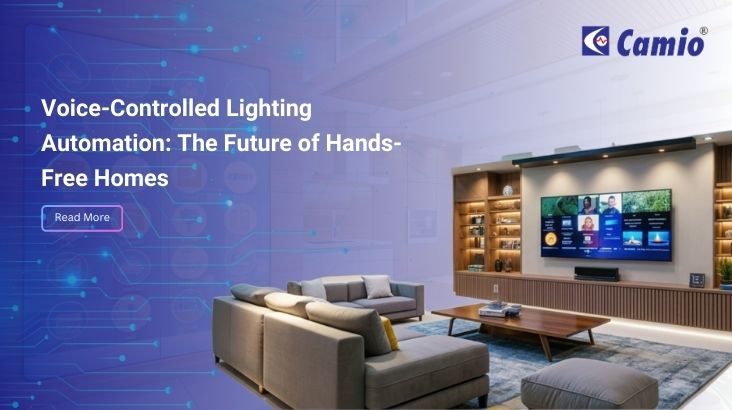
Voice-Controlled Lighting Automation: The Future of Hands-Free Homes

by admin

Voice command is a technology that is getting into everyday lives. It is now possible to unlock phones, control lights, play music, and manage smart homes with the use of voice. As a matter of fact, voice technology is used by approximately 92 million people today. It is, therefore, an indication of how easily it is making its way into everyday lives.

Talking to technology is becoming easy as more machines are being fitted with microphones and intelligent software. It is, therefore, important to know the working mechanism of voice-controlled smart lighting systems. So, let’s know!

What Is Voice-Controlled Lighting?

Lighting voice control is a major aspect of smart home automation. It allows you to turn your lights at home with a simple voice command, rather than a switch or through your mobile phone app. As an example, using an Alexa Google Home lighting automation setup, it is easy to control your lighting using voice assistants.

This technology will know what you want and adjust the lights to you. In fact, you will be able to use it to ask them to switch lights on or off, to make them dim or switch colours. This makes the control of lighting fast, simple and extremely convenient.

Advantages of Using Voice-Controlled Lights in Your Home

The following are some of the ways through which this technology is making our lives better:

· Hands-Free Control

Voice-controlled lighting enables you to control lights without having to press any switches or open any mobile apps. It is just enough to speak a word to switch on the lights, off, or dim. The feature is quite useful to the elderly, busy homemakers or anyone who has mobility problems.

· Customized Lighting Scenes

Intelligent lighting systems allow you to have various lighting environments in your day-to-day activities. As an example, you can create a movie night setting with low lights or a reading setting with brighter lights. These settings can be activated easily and quickly through a mere voice command.

· Energy Efficiency

Smart lighting, which is voice-controlled, can assist in saving electricity in your home. Also, voice commands enable you to turn off the lights when you do not need them. A lot of smart bulbs also employ energy-efficient LED technology. It assists in reducing the consumption of energy and electricity costs.

· Enhanced Security

Voice-activated lights can enhance house security. You have the option to switch lights on or off, even when you are not at home, giving the impression that somebody is inside the house. This is the easiest way to keep homeowners feeling safer and more secure.

How to Integrate the Smart Home Voice-Controlled Lighting?

It is not very complicated to incorporate voice-controlled lighting into your smart home. All you need to have is smart lights, a reliable Wi-Fi connection, and a voice assistant, such as Alexa, Google Assistant, or Siri. It is easy to set up through the following steps.

· Select Compatible Smart Lights

Begin with the choice of smart bulbs or smart switches that are compatible with voice assistants. The smart lighting automation is compatible with either Alexa, Google Assistant, or Apple HomeKit. But testers should also ensure compatibility of products to avoid purchasing a lighting system that does not fit in your smart home.

· Install the Smart Lights

Just like any normal bulb, install the smart bulb or smart switch. Install it and then, turn on the power and see whether the light is functional. This action is taken to make sure the device is prepared to be connected to your smart home.

· Install the Lights on Wi-Fi with an App

The majority of the smart lighting systems need a mobile application. So, install the application and refer to the instructions on how to enable the lights to your home Wi-Fi connection. The application is used to make your lights talk to your smartphone and voice assistant.

· Connect the Lights with a Voice Assistant

Use the Alexa or the Google Home application and connect it to your device. Choose the brand of lighting and log in if needed. Your smart lights will then be recognized and linked by the voice assistant to your home automation lighting.

· Test Voice Commands

After connecting all of them, use simple voice commands to ensure that the system is functioning correctly. You can request the assistant to light, switch off, or dim the lights. This is to ensure that your voice-activated lighting system is functioning well.

Conclusion

The homes are getting smarter and more convenient with smart home lighting. It enables individuals to control the lighting by simple voice commands. It will have the potential to make it comfortable, conserve energy, and increase security in the home with the appropriate installation. Note that voice-controlled lighting will keep being relevant in the current homes as the smart technology continues to expand.

27Feb

How Smart Home Solutions Are Transforming Modern Homes

by admin

Technology is at the heart of the rapid evolution of modern living. Homeowners of today need efficiency, security, and comfort without requiring additional work. This is the area in which smart home solutions are having a significant influence.

An analysis claims that as more homes embrace connected living, the global smart home industry is expanding gradually. According to Statista projections, the industry would grow to USD 193.5 billion by 2026. Intelligent security systems and voice-activated lighting are just two examples of how home automation is evolving from a luxury to a contemporary need.

What Are Smart Home Solutions?

It’s important to know what “smart home technology” really means before looking into the change.

Simply put, it’s a group of devices that are all linked to each other and can be controlled by smartphones, tablets, or voice assistants to automate and manage home tasks. With these systems, people can control their appliances, lights, security, and temperature from anywhere.

These are some common examples of smart home devices:

  • Smart lights and switches
  • Video doorbells
  • Smart thermostats
  • Automated curtains
  • Smart security cameras
  • Voice assistants

Integrated home automation systems make these gadgets work together, which makes homes smarter and more useful.

Key Ways Smart Homes Are Changing Modern Living

Technology isn’t just making things easier; it’s also changing how homes work every day. Let’s look at the most important changes.

Enhanced Convenience and Control:

One big difference that smart home solutions make is that they are easy to handle. Now, homeowners can:

  • Turn lights on or off from afar
  • Set the temperature of the room immediately
  • Set up machines to run at certain times
  • Control multiple devices with voice commands

This amount of automation cuts down on daily problems and saves time. Home automation enables the house to respond intelligently to your wants instead of you having to manage everything manually.

Improved Home Security:

A lot of families buy smart home technology because they want to feel safer. Those modern systems offer:

  • Mobile alerts in real time
  • Watching a camera from afar
  • Smart locks for doors
  • Sense of motion
  • Videos on doorbells

People who own these high-tech smart home devices can relax while they’re away or at work. In order to create custom security setups that fit their home’s layout and lifestyle, many property owners now contact a reputable smart home automation company in Kerala.

Better Energy Efficiency:

Another area where home automation systems are making a big difference is in managing energy. These things about smart homes help cut down on wasted electricity:

  • Schedules for automated lights
  • Light control based on motion
  • Smart thermostats that learn usage patterns
  • Dashboards for tracking energy use

These features directly add to the benefits of smart home automation, especially for families who want to save money on their energy bills and be good to the environment.

Personalized Living Experience:

These days, people who own homes expect them to change based on their needs. That’s exactly what smart home solutions let you do. As an example:

  • Lights can adjust based on time of day
  • Music can follow you from room to room
  • Curtains can open automatically in the morning
  • Climate settings can change based on occupancy

With clever smart home technology, the house learns how people live there and makes it more comfortable for them.

Seamless Device Integration:

In the past, homes had gadgets that stood alone. Integrated home automation systems do all of this today. A well-thought-out environment lets:

  • One app to control the entire home
  • Voice assistants to manage multiple functions
  • Devices to trigger each other automatically
  • Centralized monitoring and control

Installers with a lot of experience, like a smart home automation company in Kerala, can help people make systems that work well without being too complicated.

Why Homeowners Are Rapidly Adopting Smart Homes

Smart home devices are becoming more and more popular because they offer real benefits. The following are the main benefits of smart home automation that are encouraging its adoption:

  • Greater comfort and convenience
  • Enhanced family safety
  • Lower energy consumption
  • Remote home management
  • Increased property value
  • Future-ready living spaces

Higher-end homes used to be the only ones with home automation features, but now even average homes can afford them.

The Future of Smart Home Living

It’s not over yet for smart home technology to keep getting better. We can look forward to the following in the coming years:

  • Automating the future with AI
  • More interaction with voice assistants
  • More houses that are energy-efficient
  • More brands that can work together
  • More attention paid to data security

As new ideas come up, smart home solutions will get easier to use, more convenient, and more important to daily life.

Conclusion

These days, homes are more than just places to live; they’re turning into smart environments. People who have connected home automation systems feel safer, save money on energy costs, and make their own comfort levels. The fact that demand is rising shows how useful home automation is in real life. Smart living is going to become the norm for modern homes as technology improves and professional service providers, like a trustworthy smart home automation company in Kerala offer more services.

18Feb

The ultimate guide to smart lighting for residential and commercial spaces

by admin

When we talk about smart lighting, it isn’t just about some fancy bulbs, turning to blue from purple and then to red. Instead, it’s about engineering excellence, blending in automation, control, efficiency, and intelligent energy management in one package. From houses to offices, retail stores, and even industrial complexes, wireless smart lighting automation has an indispensable role in optimizing costs and shaping an immersive experience.

However, investments in smart lighting for homes and offices require clarity. That being said, let’s make some intelligent decisions based on the guide we have crafted for you.

Smart lighting in residential spaces

When we talk about homes, smart lighting focuses on personalization, comfort, and convenience. Installing the LEDs or bulbs isn’t just a way of uplifting your standards of living. Rather, it’s integrating automation control and efficiency in everyday living.

A well-orchestrated residential smart lighting setup offers innumerable benefits to the homeowners. Here’s how!

  1. Reduced electricity consumption through LED dimming and scheduling, thereby preventing unnecessary full-power operation throughout the day.
  2. Scene-based control that adjusts brightness and color temperature instantly, allowing different moods without manual recalibration.
  3. Remote access via mobile applications to enable smart lighting management even when physically absent from the site.
  4. Voice-enabled interaction with integrated assistants to simplify operations and cut off dependency on manual switches.
  5. Automated security simulation in vacant houses to create the illusion of occupancy and deter trespassers.

Proper zoning with smart lighting systems makes a huge difference. Living rooms, for instance, benefit the most from layered lighting, while kitchens usually need task-focused brightness. Similarly, bedrooms require dim-to-warm transitions for better nighttime comfort.

Smart lighting in commercial spaces

Every traditional lighting component installed at offices, retail stores, warehouses, or healthcare facilities consumes way more energy than residential ones. This is where commercial smart lighting comes into play, cutting down costs dramatically through the ways described below.

  1. Occupancy-based automation that switches the lights off in the unused zones, thereby reducing energy consumption in vacant meeting rooms, corridors, and storage rooms.
  2. Daylight harvesting controls adjust artificial lighting automatically to maintain consistent brightness while minimizing electricity usage.
  3. Centralized monitoring dashboards for multi-floor or multi-location management allow facility managers to control smart lighting systems from a unified portal.
  4. Real-time energy tracking flags inefficiencies and enables data-driven cost optimization decisions.
  5. Predictive maintenance alerts slash downtime by identifying fixture or driver issues before complete system failures.

Types of smart lighting systems

Choosing the right lighting automation system will depend on property size, infrastructure readiness, and future expansion goals. Below are some of the most common options you can explore further.

  1. Wi-Fi-based systems that are easy to install and hence ideal for small homes. However, they are not suitable for large-scale, reliable setups.
  2. Z-Wave mesh networks or Zigbee offer stronger connectivity across bigger residential properties, thereby ensuring stable device communication.
  3. DALI-based wired systems are designed for commercial buildings and offer high scalability and centralized programming.
  4. Hybrid IoT-integrated systems combine local control with cloud analytics, enabling advanced automation and reporting flows.

Design factors that influence performance

Technology alone cannot guarantee success for smart LED lighting setups. Rather, planning also plays an indispensable role in this aspect. Hence, before installation, consider the below areas.

  1. Clear zoning between task, ambient, and accent lighting is necessary so that automation doesn’t compromise functional needs.
  2. Pre-defined automation logic based on real usage patterns instead of adding controls without a clear purpose.
  3. Strong and stable network infrastructure, especially for wireless systems that rely on uninterrupted connectivity for performance deliveries.
  4. Future scalability requirements to ensure the systems can expand without complete replacement.

Cost, ROI, and sustainability

A considerable upfront investment will be required for smart lighting solutions for homes and offices. However, the long-term savings often offset the cost through lower energy consumption, reduced maintenance expenses, and extended LED lifespan.

In commercial environments, returns on investments usually become visible within a few years, depending on usage intensity. On the contrary, in residential spaces, the value originates from convenience, comfort, and controlled energy spending.

Talking from a sustainability perspective, smart lighting minimizes carbon footprint, reduces waste, and supports green building compliance standards.

Conclusion

Smart lighting is no longer a luxury upgrade of living standards. Rather, it has formed a practical, scalable solution for modern residential and commercial spaces. In homes, it enhances daily living through personalization and automation. In commercial properties, it drives measurable efficiency and operational control. When designed strategically, wireless smart lighting automation doesn’t just illuminate spaces — it optimizes them.

9Feb

How to choose the best home automation company in Kerala: 5 things to look for

by admin

Kerala’s real estate and premium residential landscape is currently undergoing a silent yet groundbreaking transformation. Smart luxury is no longer positioned as a mere luxury add-on. Instead, it is embedded in the design, experience, and value of modern villas, gated communities, and high-value developments. Thus, you can no longer align selecting the best automation partner with investing in smart devices only.

The perception has transcended to collaborating with a technology expert who can define how a property functions, scales, and performs over the next decade. True automation is not just about acquiring control— it’s about creating intelligent environments that can consistently deliver comfort, security, efficiency, and long-term asset value. That being said, let’s explore the 5 essential factors that make the real difference between the best home automation company in Kerala and ordinary smart device installers.

Kerala-engineered system architecture, not generic installations

Keralan environmental patterns have become so unpredictable over the last few decades that companies can no longer benefit from a generic automation design approach. Instead, they have to factor in high humidity, dense concrete structures, coastal breeze, monsoon exposure, and frequent power fluctuations to ensure the technical challenges of home automation can be mitigated way before they surface. Treating these as engineering inputs rather than mere afterthoughts will make the real difference.  

That being said, you need to look for a smart home automation installation partner who can design a system featuring:

  1. Moisture-safe electrical layouts with protected enclosures, if required
  2. Climate-resilient hardware and corrosion-resistant control components
  3. Surge protection and inverter-compatible automation logic
  4. Infrastructure-level planning over surface-level device automations
  5. Stable networking strategies for signal reliability inside dense structures

Only when automation is designed specific to Kerala’s physical environment can it deliver unwavering durability, scalability, and dependability.

Property-specific automation logic instead of template-based smart homes

Gated communities, luxury villas, waterfront homes, and high-rise apartments in Kerala cities function differently right at the core. That’s why intelligent automation must respond in specifics to how these are lived in, not how products are packaged. A professional smart home automation company builds systems around lifestyle patterns, human movements, and spatial behavior. With no pre-defined templates in the picture, here’s what the result would look like.

  1. Zoning logic based on privacy layers and real space usage
  2. Lighting intelligence adapting seamlessly to architectural designs and daylight patterns
  3. Climate automation responding to micro-climates and humidity variations
  4. Access control logic aligned with household movement flows
  5. Gate automation integrated into property circulation design

Infrastructure integration over a disconnected smart layer

Premium-grade smart home systems can only deliver value when they are embedded into a property’s core infrastructure. Choose a partner who defines automation’s strength not by isolated digital layers but through seamless integrations with power systems, electrical designs, security architecture, and network planning. With these, you can live in a property that truly feels connected and immersive. Here’s how.

  1. Automation continuity existing even during power transitions and outages
  2. Accessibility to a centralized system intelligence instead of having to work with multiple disconnected apps regularly
  3. Seamless, unhindered communication flows across lighting, security, climate, and access systems
  4. Network stability for humongous properties and multi-unit developments
  5. Structured cabling strategies to foster future scalability

Once automation is intertwined with infrastructure planning, it continues to grow with the property instead of restricting it. Expansion, thus, becomes evolution— not reinvention.

Lifecycle reliability, not installation-centric delivery

When we talk about premium homes and upscale developments, the best smart home company in Kerala treats automation systems as long-term assets. Rather than generating value through installation, it leverages performance over the decades as the real quantifiable metric. Here’s how it can make lifecycle reliability a non-negotiable requirement.

  1. Remote diagnostics and system monitoring
  2. Predictive maintenance frameworks
  3. Structured firmware and software lifecycle management
  4. Upgrade compatibility for emerging technologies
  5. Proactive performance optimization

Building lifecycle planning into the system design allows the best home automation company in Kerala to deliver stability, security, and relevance.

Value engineering replacing cost-based automation selling

Automation is not just about cutting down day-to-day living expenses— instead, it’s about amplifying long-term value. For high-end developments and residential properties in Kerala, it should strengthen asset positioning, enhance operational efficiency, and elevate property perception. That’s why you need to work with a home automation company that creates value via:

  1. Energy optimization through climate automation and intelligent lighting
  2. Smart infrastructure to improve market positioning
  3. Enhanced resale and rental appeal
  4. Reduced opex through efficiency-driven system logic
  5. Security intelligence to amplify the property’s trustworthiness

The best smart living partner in Kerala: Camio Automations

Whether you are a homeowner, a builder, or an architect seeking premium smart solutions, Camio Automation is hands-down the best home automation company in Kerala. Their solutions span across lighting automation, gate automation, home automation, security systems, and integrated smart ecosystems— all engineered for reliability, performance, and long-term scalability.

Camio’s approach is highly focused on infrastructure integration, system design, and lifecycle reliability— thereby creating smart environments aligned with Kerala’s architectural trends, climate patterns, and premium living standards. By blending in design sensitivity with technical depth and long-term support capability, Camio Automation has positioned itself as a true, reliable partner, and not a mere service vendor.

Conclusion

Whether it’s a premium-grade luxurious residence in Trivandrum or a waterfront villa in Kochi, your partnership with the best home automation company in Kerala will redefine the future of intelligent living. When then can you engineer automation with precision, vision, and reliability— transforming properties into immersive, living systems.

Chat with us